Good morning, beloved -
I find myself in the unusual position of having to preface this week’s dispatch with a spoiler warning. If you haven’t yet seen the final episode of Mad Men, you’ve somehow managed to avoid the media frenzy around it, and you still care, you may want to skip the following and check back in next week. (Or jump ahead to the bit about another mad man, the one named Max.)
Let me first say that I tend to approach my media consumption from a fairly shallow angle. I enjoy close readings, deconstructions, and painstaking critical analyses of the shows and movies I watch, sure. And certain reflections on Mad Men — the episode write-ups on the AV Club in particular — have enriched my understanding of the show and what its creator Matthew Weiner is trying to achieve with it. But in general I have neither the recall, nor the understanding of narrative dynamics, nor the psychological depth to come up with these readings on my own.
The final scene of the seventh season’s final episode, though: now that I have something to say about. With one move, Weiner brings the series in for a landing that’s simultaneously true to its protagonist, true to its internal logic, and true to the historical moment in which it was set. As a number of reviewers have observed, it’s a culmination that manages the weird trick of being simultaneously cynical and hopeful, and profoundly so in both cases. This is as rich and satisfying a resolution as I can remember from a work of drama in any medium, a moment of high craft.
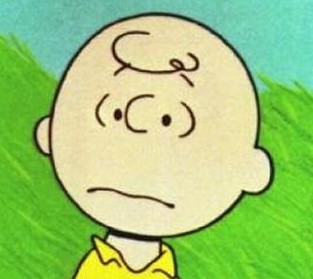
It all happens in the sounding chime, the stereotypical, even archetypal sound of Buddhist enlightenment that accompanies the cut from Don Draper’s beatific, blissed-out (but still curiously Charlie-Brownish) smile to Coca-Cola’s iconic “Hilltop” ad of 1971. We get closure in more than one sense. Everything fuses in the space of this single note: the raveled threads of a story it’s taken eight years to tell, the reintegration of Don’s shattered identity, but also the walls of an Empire with no outside, and from which there can be no escape. This cut, and the ad that follows, tells us that here man and moment are become one. I’ve never seen a more vivid depiction of the Heart Sutra’s dictum that form is emptiness, and emptiness form.
How to explain? Let’s start with the ad itself. I was there in 1971. I remember this commercial in real time, as it were. The first thing you need to understand about “Hilltop” is the scale of its impact, which is all but unimaginable now. It was one of the last documents of a unified mass culture, in the same way that the Beatles or Elvis Presley enjoyed a kind and a scale of celebrity that’s hard to reconstruct in our shattered, sharded times. “I’d Like To Teach The World To Sing” was everywhere. It was inescapable. Coke had a radio edit recorded, and you’d hear it trilling from the speakers of passing cars and the little monaural Sony transistor radios that people used to carry.
(John Brunner, prescient as ever, plays with this blurring into advertainment a few times in the 1968 Stand on Zanzibar; similarly Thomas M. Disch, in 1972’s 334. When the latter refers to characters singing along to “the new Monsanto commercial” or “the April Ford commercial,” or throws out a line like “The radio returned with the new Ford commercial,” it’s “Hilltop” and “I’d Like To Teach The World To Sing” that lend his imagination a scaffolding.)
There was a subtext to the ad, and the primary reason it connected the way it did, which was how fractured America felt in 1971. Everything was broken — so badly broken, indeed, that a three-year-old could pick up on it. White people and Black people. Working people and well-off people. Old people and young people. Counterculture people and “straight” people. Men and women. Name your fault line, and I promise you could sense it widening. These days we’re inured to it, or resigned to the idea that we each of us live in incommensurable and interautistic shards, but it was a fresh and unwelcome realization then. I don’t think it’s only in retrospect that I understand what a whole lot of people wanted from 1971: any excuse for a ceasefire and a chance to cross the chasms that had suddenly opened up around them.
“Hilltop” gave them that excuse. Its resonance lay with the hopeful notion that what we have in common outweighs that which divides us, and its specific genius in suggesting that the commonality in question, in both sign and substance, was something you could buy at the corner store for the price of a dime. With the sole exceptions of 1964’s “Daisy” and Ridley Scott’s “1984” ad for Apple, it’s very possibly the greatest television commercial of all time.
So “Hilltop” (and maybe, given the era, “Hilltop” alone of all ads) fits the shape of the what we’ve been led to expect from Don through the course of seventy-nine episodes. We’ve been told all series long that Don Draper is a creative talent of unrivaled brilliance, the ad man to end all ad men, but we’ve never been shown that this is true. We’ve seen pitches, yes. But never, if I recall correctly, any actual ad he’s responsible for, in whole or in part. “Hilltop” is one of the few pieces of evidence that might convince a reasonably sophisticated viewer not merely that genius of such magnitude existed, but that the man called Donald Draper possessed it.
And Weiner’s genius is that over the course of seven seasons he’s built a character whose journey as we’ve seen it makes that ascription of authorship not merely entirely plausible but uniquely convincing. When we’re asked to believe that this character has devised not merely one of the biggest ads of all time, but one that perfectly encapsulates its zeitgeist in each of several dimensions, we buy it immediately, without question and with a chiming sense of rightness. And it lands because we’ve followed him through his long struggle, and we can map how each of his internal fault lines is resolved in this career-capping achievement, as surely as the girl in braids and ribbons Don encounters at the Esalen reception desk later shows up in “Hilltop” verbatim.
It’s all there in the ad. It’s absolutely the corporate co-optation of the brief flower-child moment, and a mighty step toward preemption of any transformative or liberatory power it may once have enfolded. In a bleak masterstroke that validates Debord and anticipates Baudrillard, it substitutes a meaningless commodity product for genuine depths of human feeling, binding the acts of purchase and overt consumption to that feeling, and that feeling back to the product. But it also celebrates the unquestionable Pop majesty of a TV commercial as mass, even global hedonic artifact. And finally, on a deeper and sadder level, it expresses what I have to read as a genuine expression of longing for healing and wholeness, refracted upward through all of those other facets. And all of this delivered in real life by McCann Erickson — the agency that, in-universe, has been pursuing Don Draper since Mad Men’s very first season, and which had tried to lure him with this specific account for quite some while. No other commercial but “Hilltop” could have fulfilled these boundary requirements; like I say, positioning this particular ad this way against this established character is a moment of the highest dramatic craft.
And so our encounter with these characters and their times comes to an end, in a way that I cannot help but read as a caution to us in our own time. Don Draper’s fate, the address of his particular circle of hell, is that his inmost genius is fully, genuinely, sincerely and self-healingly expressed in transmuting human connection into sales of sugar water. It resolves him. It closes his circle. It brings his arc to ground. But it’s not a fate I would wish on my very worst enemy. It’ll be a long time, I think, before a work of serial entertainment leaves us with a conclusion developed with such exquisite care, over such length, that resolves so very pointedly.
— Shifting gears (ahem): as someone clever said to me last week, at this point the circulating hype about Mad Max: Fury Road is that you should believe the hype about Mad Max: Fury Road. So metahype, then, I guess.
All I can do is cosign that. Nurri and I saw it on Friday night. It’s not by any means a perfect film — I have to confess that it took me a full twenty, twenty-five minutes to get into it, and as far as I’m concerned Miller made a few curious blunders in the early going that prevented me from closing that distance. But there comes the moment that the gearteeth bite, the wheels start to turn, and you understand why everyone you know who doesn’t even like this kind of film has been raving about it. We’re going again on Monday.
Be kind to yourself, and take care of the ones around you,
ag
ldn
This is Dispatch from London No. 26 of Sunday, 24 May 2015, offered to you under the terms of a Peer Production License. You are free to reuse this content, but must acknowledge Adam Greenfield as its author. ◊