Good afternoon, beloved, and welcome to the first [dispatch of the new series] -
Last week I did something I should have done a long, long time ago, and ordered my very own copy of a 1976 book called Radical Technology, edited by Godfrey Boyle and Peter Harper. As a result, I now have the book in my hands for the first time in some thirty years, and over the past week have spent many happy, melancholy and occasionally mystified hours poring over it in detail.
The happiness is easy to explain. Radical Technology was more or less an anthology of the best content from Undercurrents, a British “magazine of radical science and people's technology” published between 1972 and 1984, which makes it an impeccable document of high hippietech’s late phase (high, surely, in more than one sense). Much like the roughly contemporary, Northern Californian Whole Earth Catalog, it reflects a body of thought and practice that was simultaneously uncompromisingly realist in its assessment of the challenges confronting humanity, and blithely utopian in how it proposed going about addressing them — think of it as a blend of equal parts Rachel Carson, Buckminster Fuller and Mao. And so you get a few hundred pages of the best decentralized technopolitical praxis the British mid-Seventies had to offer: instructions for making solar-powered, organic, household-scale hydroponic units, recommendations for would-be operators of pirate radio stations, an address to which you can send away $15 (in 1976 money!) and in return receive plans for a mast high enough to mount your handmade wind turbine on. Pictures of lash-up marshland shanties and Traveller caravans that are supposed to inspire you in your eventual exodus from the dooming city. That kind of thing. A lot of it is just goofy, funky fun.
These two seemingly discordant streams of hippie-style laissez faire and technological innovation remained woven together far longer than I think many people realize; well into the mid-Nineties, for example, the Bay Area’s largest retailer and provider of aftermarket support for Macintosh computers remained a business run by devotees of the utopian Upper Haight commune/sex cult Kerista, with their science-fictiony, three-letter names. In the end, of course, the world of Apple ate the world of Kerista entire, and not the other way around, and though there are always eddies, fractal inclusions and slight returns in any such envelopment, the victory appears to have been both total and permanent.
And this is what accounts for the melancholy. It isn’t simply that the funky future of resourceful, decentralized, low-to-no-impact dissidence on offer in Radical Technology didn't happen. It’s that the particular way in which it didn’t happen made a nonsense of the authors’ implicit technopolitical determinism, and therefore the revolutionary hope they had bound up in the ways of doing and making they promoted so fervently. Much as certain dinosaurian lineages didn’t so much go extinct as evolve into the birds we see and hear everywhere around us, hippietech did more than survive. It thrived. It just did so in an astonishingly lossy manner, becoming folded into what has become the dominant technological mode of the late capitalist everyday without altering the terms of that settlement one whit.
The list of tools and concepts in Radical Technology you can say this about is long, and unintentionally impressive. Most obviously, of course, the vision of unlimited access to information nurtured by what I always think of as the Steve Woz current of ecstatic, beardy engineers more or less directly gave rise to personal computing as it was imagined in Silicon Valley, with the eventual internetworking of those computers and their transformation into mobile handsets as simultaneous realization, apotheosis and thorough undoing of their dreams. But it also turned out that you could organize organic foods, solar and wind power, personal micromobility, electric vehicles and even local, on-demand fabrication at industrial scale, in ways entirely consonant with late capitalism's conventional modes of production and consumption, without taking on board any of the millennial hopes once associated with them, with all the predictable consequences for the lifeways associated with their use.
And that leads us to the final feeling that shrouds the hours I spent reading Radical Technology, which is mystification. Just how is it that such powerful magicks were so readily recuperated? How is it that so many of the dreams nurtured by the contributors to Undercurrents actually came true, more or less as envisioned even, without changing the fundamental balance of power in the world? My provisional answer is that convenience is something of a universal solvent, and that an overwhelming percentage of people — North or South, favela or asfalto — prefer to outsource the management of complexity to the market as soon as it is feasible to do so. They’d rather buy something shrinkwrapped and engineered to within an inch of its life than contend with all the untoward weirdness under the hood. And let’s face it, given the brevity of life and the likelihood that any of us will ever have the time to become competent maintainers of complex systems, this is not an entirely unreasonable position. (I’m also put in mind of something an elderly Black Baltimorean once told my friend Fred Scharmen, vis à vis the architecture students regularly parachuted into his depopulated neighborhood, and the many do-gooding urban-agriculture projects they brought with them: “Man, we moved up here from Alabama just so we wouldn’t have to keep chickens and bees in our backyard.”)
I don’t think the story necessarily ends here. But my sense is that those of us who find the vision of Radical Technology still resonates and would like to see it renewed in some manner suited to our own time, will have to account for a countervailing logic deeper still than capitalism if we wish to have any hope of seeing this set of imaginaries made real.
Briefly, for this week:
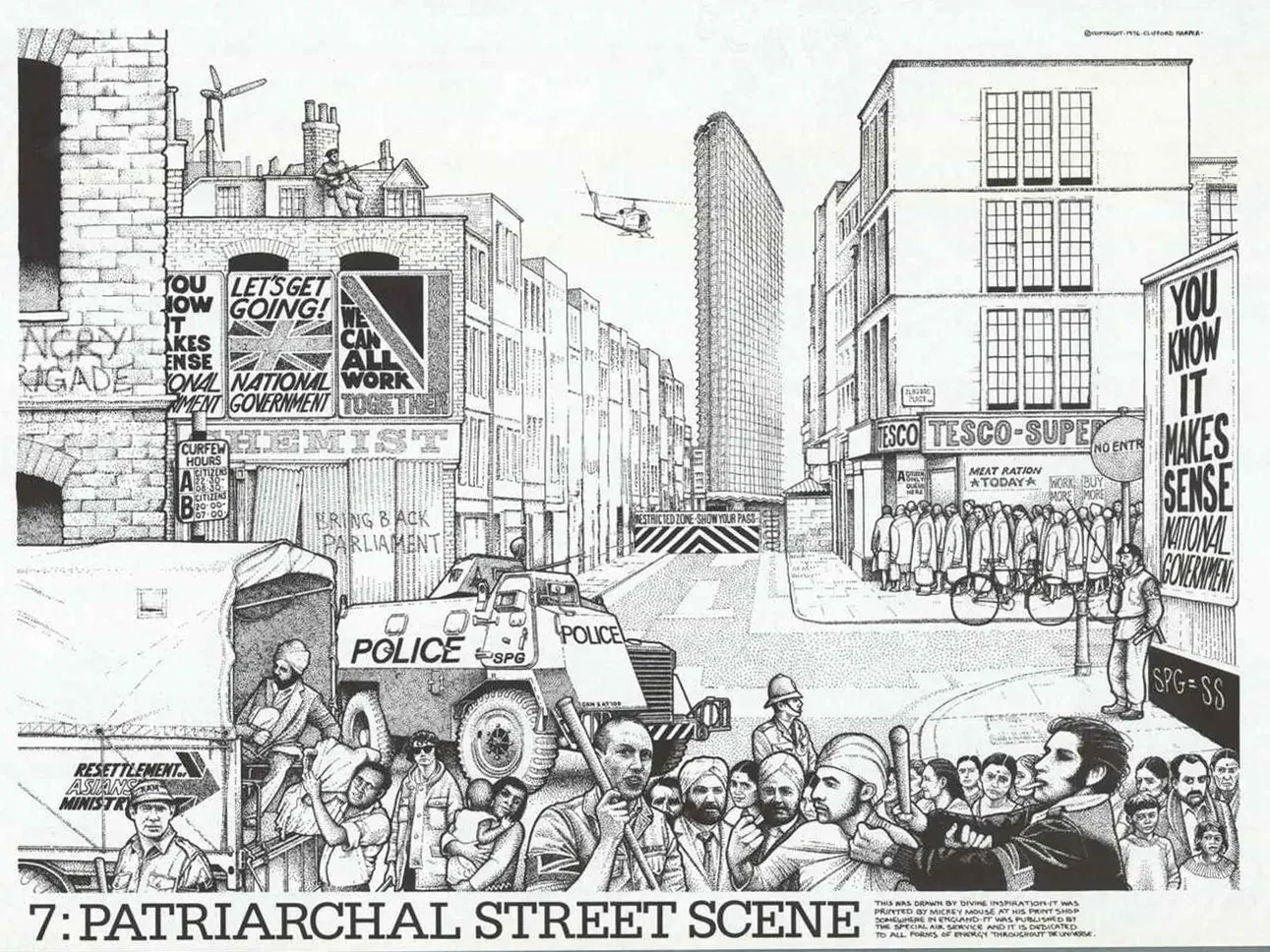
- Can't get enough of this stuff? I’ve written before about Cliff Harper’s legendary “Visions” drawings, there’s a newish book on the enduring genius of hippietech designer Ken Isaacs out, and you may also be interested in the extraordinary Hippie Modernism exhibition that documented this moment from another direction.
- They had me at “Chernobyl”; the Stalkers’ Guide bit merely sealed the deal. Though you could probably put that the other way around and it’d still be true.
- I’ve got a piece on Amazon and the frictionlessness of ecommerce in today’s Grauniad; next week in the dispatch we'll consider what's implied by the differences between the piece as I submitted it and as edited for publication.
Reading (or better, struggling with) Kathryn Yusoff’s appallingly written A Billion Black Anthropocenes or None, and about to crack KSR’s 2312; listening to 1981’s Moebius/Plank opus Material; watching nothing much at the moment, but maybe I'll get to Stowaway later on in the week. I’ll let you know.
Until next time, then: please remember to take care of yourself and those who need you, and to let yourself be taken care of. You have, as ever,
all my faith
ag
ldn
This is Dispatch from London No. 108 of Sunday, 25 April 2021, offered to you under the terms of a Peer Production License. You are free to reuse this content, but must acknowledge Adam Greenfield as its author. ◊